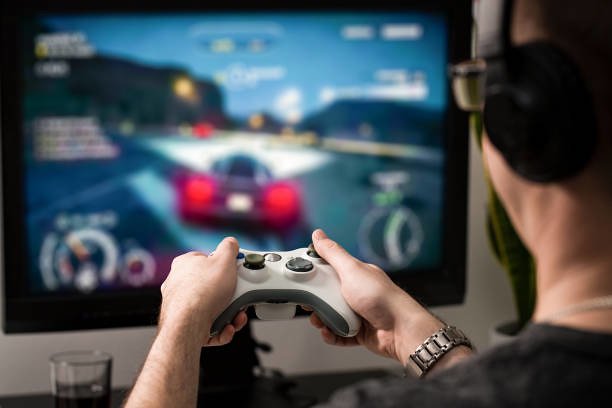
There was a time when gaming meant hardware. A console under the TV, a bulky PC tower humming in the corner, or maybe a handheld device you treated like treasure. Performance depended on what you owned, not what you wanted.
Now that idea is slowly dissolving.
Games are drifting away from physical devices and moving into servers, data centers, and streaming pipelines. And while that sounds simple on paper, the real challenge underneath is anything but simple. It all comes down to one invisible enemy: latency.
Gaming Without Borders (and Without Hardware Limits)
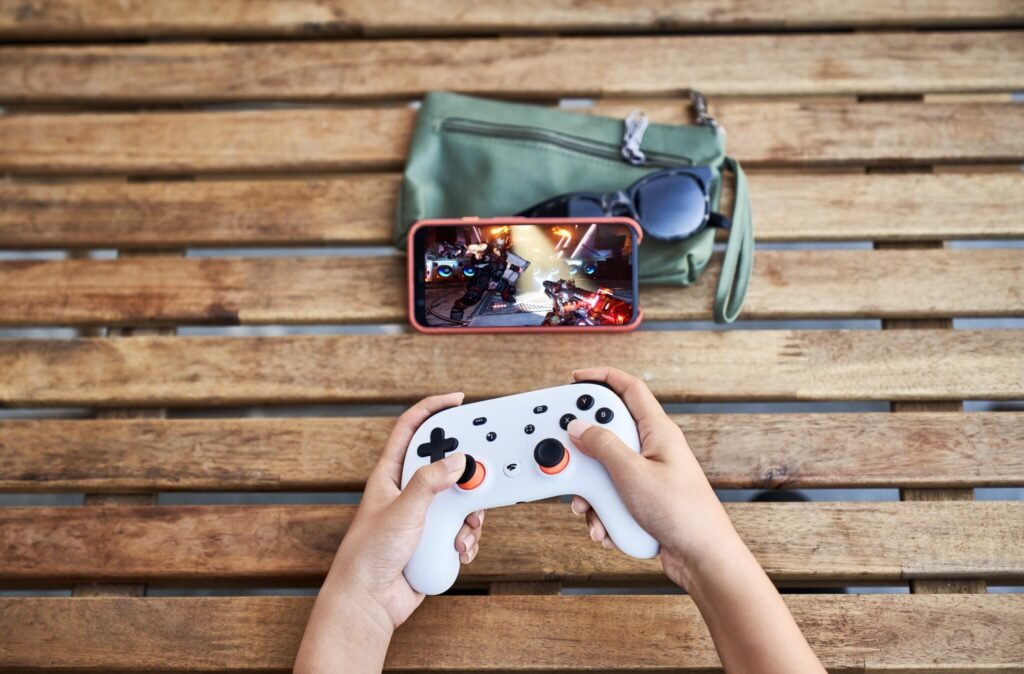
Cloud gaming promises something almost too convenient—play high-end games on almost any device, without worrying about specs. Your phone, your old laptop, even a smart TV can suddenly become a gaming machine.
Related storyWhen Games Start Feeling Like Gambling: The Growing Debate Around Loot Boxes
But the experience only works if the delay between your input and the game’s response is almost unnoticeable. That tiny gap—milliseconds really—is what decides whether cloud gaming feels magical or frustrating.
And this is where engineering gets very serious very quickly.
Because streaming a movie is easy. Streaming an interactive, real-time world where every button press matters? That’s a completely different level of complexity.
The Invisible Battle: Speed vs Distance
The biggest challenge in cloud gaming isn’t graphics or storage. It’s distance.
Related storyWhen Games Stop Telling Stories and Start Living Them: The Rise of Procedural Worlds
Your input travels from your device to a remote server, gets processed, rendered into a video frame, and then sent back to you—all in real time. If any part of that chain slows down, the experience breaks.
It might not sound like much, but even a 50-millisecond delay can ruin fast-paced games. Competitive players notice it instantly. Casual players feel it subconsciously.
This is why companies are investing heavily in infrastructure closer to users—edge servers, regional data hubs, and optimized routing systems that shave off every possible millisecond.
And right at the center of this race is the growing field of Cloud gaming latency optimization technologies and future scope, which is quietly shaping how the next generation of gaming will feel.
Why Latency Feels Worse Than It Actually Is
Here’s something interesting: humans are more sensitive to delay in interactive systems than most people realize. Watching a video with a slight delay? Fine. Pressing a button and seeing delayed action? Instantly noticeable.
That’s why cloud gaming doesn’t just need to be fast—it needs to feel instant.
To achieve that, engineers break latency into layers:
- Input delay
- Network transmission time
- Server processing time
- Video encoding and decoding
- Display refresh lag
Each layer might only add a few milliseconds, but together they can stack up quickly.
So optimization isn’t about one big fix. It’s about dozens of tiny improvements working together.
Edge Computing: Bringing the Game Closer to You
One of the biggest breakthroughs in cloud gaming is edge computing. Instead of relying on massive centralized servers far away, companies are placing smaller data centers closer to users.
Think of it like moving the kitchen closer to the restaurant tables. The food (or in this case, game data) arrives faster simply because the distance is shorter.
This shift alone has dramatically improved responsiveness in many regions.
But even edge computing isn’t a perfect solution. It still depends on network conditions, ISP quality, and traffic congestion. So engineers keep layering new solutions on top.
Compression, Prediction, and a Bit of Smart Guessing
To reduce lag further, cloud gaming systems now rely heavily on intelligent compression algorithms. Instead of sending raw frames, they compress and optimize video streams in real time.
Some systems even use predictive models—guessing what a player might do next and pre-rendering frames before the input fully arrives.
It sounds risky, but when done well, it makes gameplay feel smoother than expected.
Of course, prediction isn’t perfect. Sometimes the system guesses wrong, and you get a slight visual correction. But most players don’t even notice unless they’re actively looking for it.
The Real-Time Challenge No One Can Fully Escape
No matter how advanced the technology gets, one truth remains: physics still exists.
Data can only travel so fast. Light has limits. Networks have congestion. Even the best system in the world can’t eliminate latency completely.
So the goal has shifted from “removing lag” to “hiding lag.”
And that’s a subtle but important difference.
Developers are constantly balancing performance, cost, and user experience. It’s not just about making games playable—it’s about making them feel native to the device, even when they’re running hundreds of kilometers away.
The Future Isn’t Consoles or PCs—It’s Connectivity
If cloud gaming continues to evolve at this pace, the definition of a “gaming device” might disappear altogether. The device becomes just a screen and an input tool. Everything else lives elsewhere.
That changes not only how games are played, but how they’re designed. Developers can build more complex worlds without worrying about hardware limitations on the user’s side.
But it also raises expectations. If everything is streamed, users will expect everything to be instant.
And that expectation is exactly what keeps pushing innovation forward in areas like Cloud gaming latency optimization technologies and future scope.
Where This All Quietly Leads
Cloud gaming isn’t just a technical shift—it’s a cultural one. It changes ownership, access, and even the idea of upgrading hardware.
Instead of buying a new console every few years, users might just subscribe to better performance tiers. Instead of downloading massive games, they might just click and play instantly.
It feels simple on the surface, but underneath it’s one of the most complex engineering challenges in modern entertainment.
Final Thought: Gaming Without Waiting
At its core, cloud gaming is about removing friction. No downloads. No installations. No hardware upgrades. Just access.
But the real test isn’t access—it’s responsiveness.
Because in gaming, timing isn’t just important. It is the experience.
And as latency optimization technologies continue to evolve, the gap between action and reaction is slowly shrinking—bringing us closer to a future where games don’t feel streamed at all.
They just feel… immediate.