Manufacturing has always been about precision. Every bolt, every cycle, every second on the production line matters. But for a long time, a lot of that precision came from experience, manual monitoring, and trial-and-error fixes that only showed their value after something went wrong.
Now, something different is happening. Factories are starting to behave less like static systems and more like living, learning environments.
And at the center of that shift is a concept that sounds almost futuristic—but is already very real.
The Factory That Exists Twice
A digital twin is exactly what it sounds like: a virtual replica of a physical system. In manufacturing, that means a complete digital version of a factory, machine, or production line that mirrors real-world operations in real time.
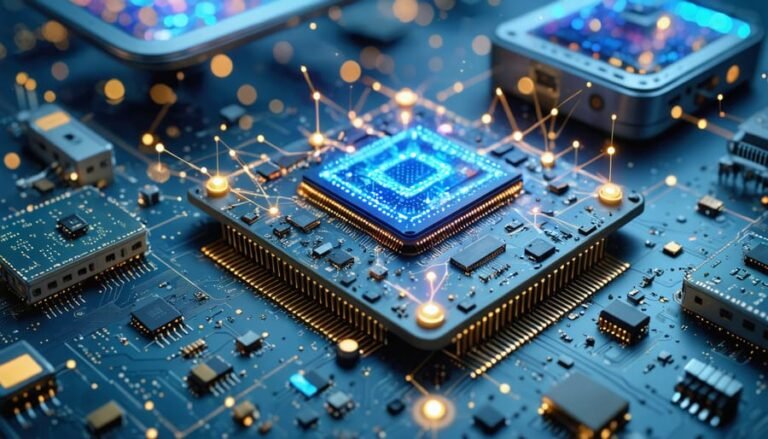
Sensors collect data from physical equipment—temperature, speed, pressure, wear and tear—and feed it into a digital environment. That virtual model then simulates performance, predicts outcomes, and highlights potential issues before they actually happen.
It’s like having a parallel factory running inside a computer, quietly analyzing every movement.
And that’s where Digital twin technology in manufacturing optimization starts becoming more than just an industry buzzword. It becomes a practical tool for decision-making, efficiency, and long-term planning.
Why Traditional Manufacturing Needed an Upgrade
Old-school manufacturing relied heavily on reactive systems. Something breaks, you fix it. Production slows, you adjust. Quality drops, you investigate afterward.
It worked—but it wasn’t always efficient.
Downtime was expensive. Small inefficiencies often went unnoticed until they became bigger problems. And planning improvements required shutting down systems or running costly experiments.
Manufacturers needed a way to see problems before they happened, not after.
That’s exactly what digital twins started offering.
Predicting Problems Before They Exist
One of the most powerful aspects of digital twins is prediction. Instead of waiting for a machine to fail, the system can simulate wear patterns and signal when maintenance might be needed.
It’s not guesswork. It’s data-driven forecasting based on real-time conditions.
For example, if a motor starts running slightly hotter than usual, the digital twin picks up that deviation and can model what might happen over time. Maybe efficiency drops. Maybe failure risk increases. Either way, teams get a warning early enough to act.
This shift from reactive to predictive maintenance alone has already changed how many factories operate.
The Invisible Efficiency Layer in Modern Plants
What makes digital twins so interesting is that they don’t physically change the factory. Machines still look the same. Production lines still run the same way.
The difference is in the visibility.
Suddenly, managers can see bottlenecks forming before they actually slow production. Engineers can test changes virtually before applying them in real life. Even small tweaks—like adjusting conveyor speed or recalibrating machine timing—can be simulated for impact before implementation.
And that reduces risk. A lot.
Where Optimization Actually Happens
Optimization in manufacturing isn’t always about big transformations. Sometimes it’s about tiny improvements repeated across thousands of cycles.
A 2% efficiency gain in one process might not sound dramatic, but across a large-scale factory, it can translate into significant savings over time.
Digital twins make these micro-optimizations easier to identify. They highlight patterns humans might miss—slight delays, energy spikes, uneven workloads.
And once those patterns are visible, they can be adjusted with far more confidence.
That’s where Digital twin technology in manufacturing optimization becomes especially valuable—not as a replacement for human decision-making, but as a support system that sharpens it.
The Human Role Doesn’t Disappear
There’s sometimes a fear that technologies like digital twins will replace human expertise. But in manufacturing, that’s not really how it plays out.
Instead, roles shift.
Operators become analysts. Engineers become system interpreters. Managers rely more on simulation insights but still make final decisions based on experience and context.
The technology doesn’t remove judgment—it enhances it.
Because even the most advanced simulation can’t fully understand external realities like supply chain disruptions, workforce constraints, or sudden market changes.
Challenges Beneath the Surface
Of course, implementing digital twin systems isn’t effortless.
First, there’s the cost. Building a detailed virtual replica of a factory requires infrastructure, sensors, software integration, and ongoing maintenance.
Then there’s data complexity. A digital twin is only as good as the data it receives. Inconsistent or incomplete data can lead to misleading insights.
And finally, there’s the learning curve. Teams need time to trust and understand how to interpret simulation outputs effectively.
So while the benefits are clear, adoption still requires patience and investment.
The Shift Toward Smarter Factories
Despite the challenges, the direction is clear. Manufacturing is steadily moving toward more intelligent systems that don’t just execute tasks but analyze and improve them continuously.
Digital twins are part of a broader movement toward Industry 4.0—where automation, data, and connectivity come together to create adaptive production environments.
Factories are no longer just physical spaces. They’re becoming hybrid systems where the physical and digital continuously interact.
Real Value Comes From Continuous Learning
Perhaps the most important thing about digital twins is that they don’t just optimize once. They keep learning.
Every cycle, every adjustment, every output feeds back into the system. Over time, the model becomes more accurate, more responsive, and more useful.
It’s a loop of constant refinement. And in manufacturing, that kind of ongoing improvement is incredibly valuable.
A Quiet Transformation Already Underway
We’re not talking about a distant future here. Many industries—automotive, aerospace, electronics, even food production—are already using digital twins in some form.
Some are advanced, others are still experimental. But the trajectory is consistent: more visibility, more prediction, more control.
And as these systems become more accessible, smaller manufacturers are likely to adopt them too, not just large industrial players.
Closing Thoughts: Factories That Think Ahead
Manufacturing has always been about building things efficiently. But now it’s starting to include something new—thinking ahead.
Digital twins don’t just reflect reality. They simulate possibilities, test outcomes, and help teams make better decisions before problems even appear.
And while the technology behind it is complex, the goal is simple: fewer surprises, better performance, and smarter production.
In the end, the factory of the future isn’t just automated. It’s aware.