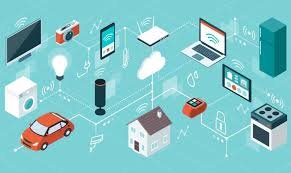
There’s something a bit strange about modern technology if you pause and think about it. We’ve filled homes, offices, factories, even farms with devices that are constantly “listening,” “watching,” and “measuring.” Thermostats adjust themselves. Cameras detect motion. Wearables track sleep, heart rate, stress levels. Everything is connected.
But for a long time, all that data had to travel somewhere else to actually make sense of it. Usually the cloud. And that meant delay. Sometimes tiny, sometimes noticeable—but always there.
Now, that pattern is starting to shift in a very interesting way. Instead of sending everything away for processing, devices are beginning to think for themselves. Not fully, not like science fiction—but just enough to make things faster, smarter, and more efficient.
From Cloud Dependence to Local Intelligence
For years, the cloud was the brain behind IoT devices. Your smart doorbell, for example, would capture video, send it to a server somewhere far away, process it, and then send a response back.
It worked—but it wasn’t exactly instant. And in situations where timing matters (security alerts, industrial sensors, healthcare monitoring), that delay becomes a real limitation.
So engineers started asking a simple question: why send everything away if some decisions can be made right where the data is created?
That question is shaping a major shift in how devices are designed today.
The Rise of Smarter, Smaller Hardware
Edge computing didn’t appear overnight. It slowly evolved as hardware got more efficient and energy constraints became more manageable.
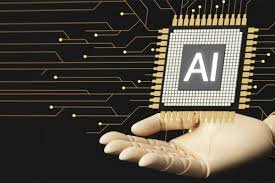
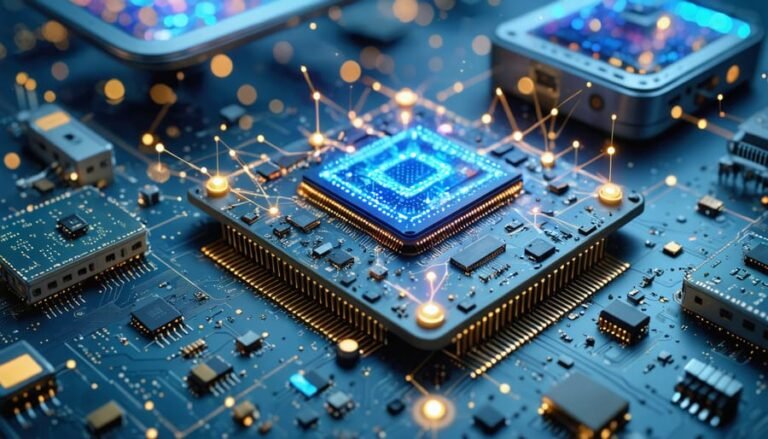
Now we’re seeing a new generation of chips designed specifically to handle AI tasks directly on devices. These aren’t massive processors like in data centers. They’re small, optimized, and built for one thing: making quick decisions locally.
Instead of relying on constant cloud communication, devices can now process voice commands, detect anomalies, and even run lightweight machine learning models on the spot.
And this is where the transformation becomes really noticeable in everyday tech behavior.
Why Speed at the Edge Changes Everything
Latency sounds like a technical term, but in real life, it’s just delay. And humans notice delay more than they realize.
A smart camera that reacts half a second faster can mean catching a break-in. A wearable that processes health data instantly can trigger earlier alerts. A factory sensor that detects overheating in real time can prevent costly damage.
When decisions happen locally, the system feels more responsive. Less waiting. Less dependency. More immediate action.
That responsiveness is becoming a key reason behind the growing interest in Edge AI chips improving IoT device performance, especially in industries where milliseconds matter more than convenience.
IoT Is No Longer Just “Connected”—It’s Becoming “Aware”
Early IoT devices were mostly reactive. They collected data and sent it elsewhere. That was their main job.
Now, they’re becoming more contextual.
A smart thermostat doesn’t just report temperature anymore—it understands patterns. A security camera doesn’t just record—it can differentiate between a person, an animal, or just moving leaves. A smartwatch doesn’t just count steps—it can interpret activity levels and suggest behavior changes.
This shift is subtle but powerful. It moves IoT from passive observation to active interpretation.
And that’s only possible because intelligence is moving closer to the source of data.
The Real Engineering Challenge Behind the Scenes
On the surface, it might sound simple: just add AI to a chip and run it locally. But in reality, it’s a balancing act.
Edge devices don’t have the luxury of unlimited power, cooling, or memory. Everything has constraints.
So engineers have to optimize aggressively:
- Models must be lightweight
- Power consumption must stay low
- Heat generation must be controlled
- Performance must remain consistent
It’s like trying to fit a full orchestra into a backpack—something has to be redesigned, not just scaled down.
That’s why the development of specialized hardware is so important. General-purpose chips can’t always handle these demands efficiently.
Privacy Gets a Quiet Upgrade Too
There’s another benefit that often gets mentioned but not fully appreciated: privacy.
When data is processed locally, less of it needs to leave the device. That means fewer transfers, fewer storage risks, and less exposure to external systems.
For users, this doesn’t always show up as a visible feature. There’s no flashy “privacy mode” indicator. It just quietly reduces risk in the background.
And in a world increasingly sensitive to data handling, that matters more than ever.
Not Everything Belongs at the Edge (And That’s Okay)
It’s easy to assume edge computing will replace cloud systems entirely. It won’t—and it doesn’t need to.
The cloud is still essential for heavy computation, long-term storage, and large-scale model training. Edge and cloud are becoming partners rather than competitors.
Think of it like this: the edge handles quick decisions, while the cloud handles deep thinking.
Together, they create a hybrid system that is both fast and powerful.
Where This Technology Quietly Heads Next
As hardware continues to evolve, edge AI will likely become more invisible, not more noticeable. It won’t feel like “special tech” anymore—it will just be how devices work.
Sensors will get smarter without getting bigger. Appliances will respond more naturally. Industrial systems will self-correct faster. Even everyday consumer devices will feel a bit more intuitive without users thinking about why.
And in that future, the impact of Edge AI chips improving IoT device performance will be less about a single breakthrough and more about a steady, widespread upgrade across everything connected.
Final Thought: Intelligence That Stays Close to Home
What’s happening with edge AI isn’t just a hardware upgrade. It’s a shift in where intelligence lives.
Instead of everything being centralized far away, decision-making is slowly returning to the devices themselves—closer to the action, closer to the user, closer to reality.
It’s a quieter kind of progress. Not flashy, not always visible, but deeply meaningful in how it reshapes responsiveness, efficiency, and trust in connected systems.
And as this technology matures, the smartest devices won’t necessarily be the ones that rely most on the cloud.
They’ll be the ones that know when not to.