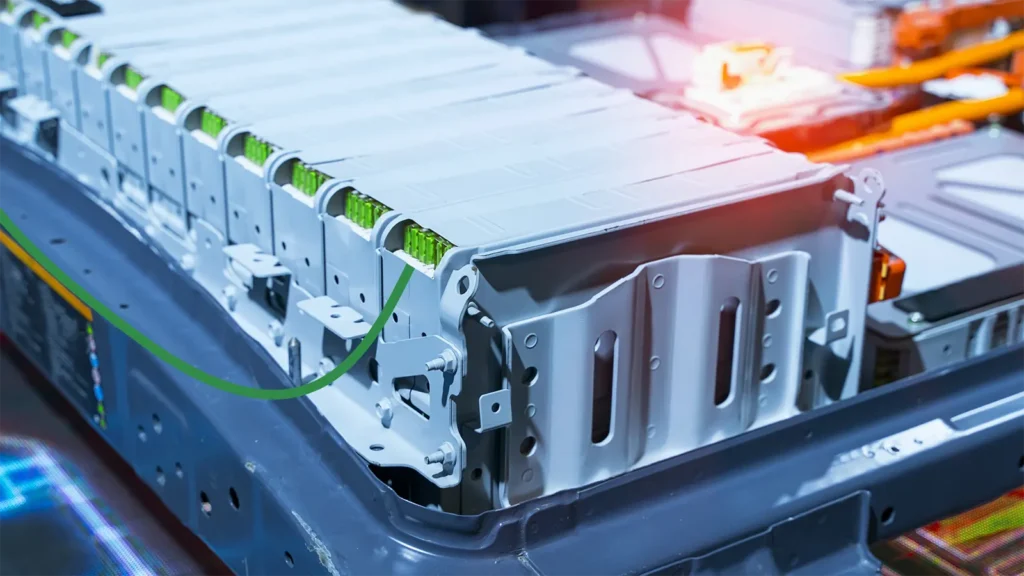
Electric vehicles have already changed the way we think about transportation, but what’s happening inside the battery labs right now feels even more transformative—almost like a second wave of innovation quietly building under the surface. Solid-state batteries, once a distant research idea, are now edging closer to real-world EV deployment. And with that shift comes a less glamorous but absolutely critical topic: safety testing.
Most people talk about range, charging speed, or cost. But engineers? They obsess over what happens when things go wrong. Because in the real world, batteries don’t just sit neatly in perfect conditions—they get hot, cold, shaken, overcharged, and stressed in ways lab brochures don’t always show.
Why Solid-State Batteries Are a Big Deal (and a Bigger Responsibility)
Solid-state batteries replace the flammable liquid electrolyte found in traditional lithium-ion cells with a solid material. On paper, this sounds simple. In reality, it changes almost everything about how the battery behaves.
Related storyRethinking Urban Parking: How Connected Roads Are Quietly Fixing City Chaos
They promise higher energy density, longer life cycles, and most importantly, improved safety. But “safer” doesn’t mean “risk-free.” In fact, the new chemistry introduces its own set of uncertainties—cracks in solid electrolytes, interface instability, and unexpected failure modes that don’t always show up in older testing frameworks.
This is why manufacturers are rewriting the rulebook. They’re not just upgrading batteries; they’re rethinking how to even test them in the first place.
The Hidden World of Safety Validation
Behind every promising EV battery is a long, almost tedious sequence of stress tests. Engineers simulate everything from nail penetration to thermal runaway scenarios. It sounds dramatic—and it is—but it’s also necessary.
Related storyHydrogen Combustion Engines in Heavy-Duty Transport: A Realistic Look at What Comes Next
Unlike conventional batteries, solid-state designs don’t behave in fully predictable ways when stressed. A small mechanical defect can cascade into performance loss long before a catastrophic failure shows up. So testing isn’t just about “will it explode or not?” It’s about mapping subtle degradation patterns that happen over time.
This is where modern labs are shifting toward multi-layered validation systems—combining mechanical, thermal, and electrochemical testing simultaneously instead of treating them as separate events.
A New Benchmark for EV Safety Engineering
One of the most interesting developments in this space is how standardized testing is evolving. Traditional EV battery tests were built around liquid electrolyte behavior, which doesn’t fully apply anymore.
Now, companies are developing more adaptive frameworks, including advanced simulation models and AI-driven predictive stress testing. These systems try to forecast how microscopic cracks or interface separations might evolve under real driving conditions.
And right in the middle of this shift, a new engineering discipline is forming around Solid-state battery safety testing protocols in electric vehicles. It’s not just a checklist anymore—it’s becoming a dynamic process that blends materials science, data analytics, and real-world simulation.
Instead of asking “does it pass or fail?”, engineers are now asking “how does it fail, and can we predict it before it happens in a car on the road?”
Why Real-World Conditions Matter More Than Ever
Lab testing is controlled. Roads are not. That simple gap is where most innovation pressure comes from.
Think about an EV driving through Rajasthan heat in summer, then charging overnight in a colder region, then hitting a rough road the next day. Each of these conditions stresses the battery differently. Solid-state systems, while more stable chemically, still react to mechanical strain and temperature fluctuations in ways researchers are actively learning about.
So manufacturers are increasingly moving toward “life-like” testing environments—shake tables, rapid thermal cycling chambers, and even simulated driving tracks that replicate years of wear in a matter of weeks.
The Human Side of Battery Safety
It’s easy to forget, but every test result eventually connects back to trust. A driver may never think about electrolyte interfaces or microfractures, but they absolutely rely on them.
That’s why engineers often describe their work as invisible protection. If everything works perfectly, nobody notices. If something fails, it becomes a headline.
There’s a quiet pressure in that responsibility. It pushes teams to over-test rather than under-test, to simulate worst-case scenarios instead of ideal ones, and to assume that real life will always be more chaotic than the lab.
Where This Technology Is Headed Next
We’re still in the early phase of solid-state adoption in vehicles. Mass-market deployment is expected to take time, mainly because scaling manufacturing while maintaining safety consistency is incredibly complex.
But progress is steady. Every testing cycle refines the understanding of how these batteries behave under stress. And with each improvement, confidence grows—not just among engineers, but eventually among consumers too.
What’s especially interesting is how safety testing is becoming a selling point in itself. Automakers are beginning to highlight not just range or charging speed, but how extensively a battery system has been validated under extreme conditions.
That shift says a lot about where the industry is heading: safety is no longer a background requirement—it’s part of the product identity.
Final Thoughts
Solid-state batteries aren’t just a new energy storage solution; they represent a deeper redesign of how electric mobility is built from the inside out. And while the headlines usually focus on performance gains, the real story is unfolding quietly in testing labs around the world.
Every simulation run, every stress test, every failure analysis adds another layer of confidence. And in that process, safety stops being a feature and becomes something more fundamental—something engineered at every microscopic level, long before a car ever reaches the road.