Water is one of those everyday things we rarely appreciate until it starts causing trouble. Maybe your morning coffee tastes a little different, white marks keep appearing around the kitchen faucet, or the showerhead seems to clog up faster than it used to. These small annoyances can make you wonder whether your water needs treatment, and if so, where to begin.
The answer isn’t always as simple as buying a filter. Water quality varies from one property to another, and different problems call for different solutions. A household dealing with mineral buildup has different needs from one trying to improve drinking-water taste. Understanding what’s in your water before investing in equipment can save money and make the whole process less confusing.
Start With the Water You Already Have
Before comparing products, take a little time to understand your water source. Municipal supplies are generally treated and monitored, while private wells can be affected by local geology, nearby land use, and changing environmental conditions. Even within the same neighborhood, water characteristics may differ from one property to another.
Household clues can help you identify concerns worth investigating. White deposits around faucets may indicate hard water, while reddish stains can sometimes point toward iron. An unusual taste or smell may have several possible causes. However, these signs don’t provide a complete picture of water quality. Some substances cannot be detected by sight, taste, or smell.
A suitable water test is a sensible starting point. Depending on your water source, it may examine hardness, pH, dissolved solids, iron, or specific contaminants. If you’re concerned about bacteria, lead, nitrates, or other health-related substances, choose an appropriate testing method and consider using a certified laboratory.
Testing also helps you avoid paying for equipment you don’t need. A salesperson may recommend a system with several filtration stages, but more components don’t automatically mean better results. What matters is whether the equipment addresses the actual concern.
Understanding Chlorine and Drinking-Water Taste
One of the first things people notice about tap water is its taste. Sometimes it has a faint swimming-pool-like smell, particularly when the water has been treated with chlorine. This disinfectant is commonly used in municipal water supplies to control harmful microorganisms as water moves through the distribution network.
Its presence isn’t automatically a sign that the water is unsafe. Disinfection plays an important role in protecting public health. Still, some people dislike the taste or smell, especially when drinking plain water or making tea and coffee.
If taste is the main concern, an activated carbon filter may be worth considering. Carbon filtration can reduce chlorine taste and odor when the product is designed and certified for that purpose. These filters are available in pitchers, faucet-mounted units, under-sink systems, and whole-house configurations.
The right choice depends on where you want to improve the water. A small kitchen filter may be enough if the concern is limited to drinking and cooking. A whole-house unit may be more appropriate when a particular issue affects several fixtures.
Pay attention to replacement schedules, too. Carbon media has a limited service life, and its effectiveness can decline as it becomes exhausted. Replacing cartridges as directed helps maintain the intended performance. Also, remember that a filter designed to improve taste isn’t necessarily designed to remove every contaminant.
When Hard Water Becomes a Household Headache
Hard water contains elevated levels of dissolved minerals, mainly calcium and magnesium. These minerals are common in groundwater and can create a familiar list of frustrations: chalky deposits on shower screens, spotted glassware, soap that doesn’t lather well, and scale accumulating inside water heaters.
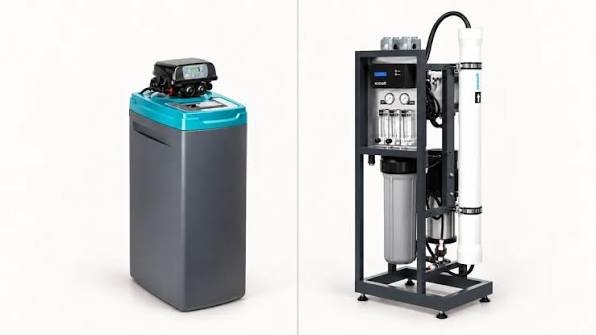
For households dealing with these problems throughout the property, a water softener may be a practical option. Traditional ion-exchange softeners reduce hardness by exchanging calcium and magnesium ions for other ions, commonly sodium. This can help limit scale formation and make some cleaning tasks easier.
However, softening isn’t the same as purification. A conventional softener is designed primarily to address hardness, not to remove every unwanted substance from drinking water. If testing identifies other concerns, additional treatment may be needed.
Choosing the right unit involves more than picking a size from an online product page. Household water use, hardness levels, available installation space, and maintenance preferences all matter. An undersized unit may regenerate too frequently, while a system that’s larger than necessary can add expense without a meaningful benefit.
Traditional softeners also require ongoing attention, including salt replenishment and periodic checks. Some homeowners have questions about sodium in softened water, so it’s worth discussing the options with a qualified water-treatment professional if that matters to your household.
What Reverse Osmosis Can Offer
Sometimes the main concern isn’t hardness or taste but particular dissolved substances in drinking water. Depending on the water test results, a reverse osmosis system may provide a useful treatment option.
Reverse osmosis uses pressure to move water through a semipermeable membrane, reducing many dissolved substances. The exact performance depends on the system and the contaminants being targeted, so check the manufacturer’s documentation and relevant independent certifications before buying.
Many units include prefilters that protect the membrane, along with a post-filter that may improve taste. Some models use a storage tank, while others are designed to operate without one. Before installation, consider the space beneath your sink, the available water pressure, and how much filtered water your household uses throughout the day.
There are trade-offs. Conventional reverse osmosis systems can send some water to the drain during production, and the membrane and filters require replacement. A system that produces water too slowly may also become frustrating in a busy household. These details are worth understanding before committing to a purchase.
Reverse osmosis isn’t necessary for every home. If a simpler filter can address the concern identified by testing, a more complex system may not offer enough additional value to justify its cost.
Installation and Maintenance Matter More Than You Might Expect
Even suitable equipment needs proper installation to work as intended. Connections should be secure, the system should be correctly sized, and any flushing instructions should be followed before use. More involved installations may require a qualified plumber or water-treatment technician.
Maintenance deserves equal attention. Filters have replacement intervals, softeners need routine checks, and reverse osmosis membranes eventually reach the end of their useful life. Ignoring these tasks can reduce performance and lead to unnecessary frustration.
Keep a record of installation dates, filter changes, and service visits. If the taste changes, pressure drops, or the original problem returns, those records can help you determine whether maintenance or further testing is needed.
Make a Choice That Fits Your Home
Better water doesn’t always require the most expensive equipment on the market. It begins with understanding the problem, comparing treatment methods, and choosing a system with documented performance that matches your needs.
Ask questions about installation costs, replacement parts, maintenance, and what the equipment is not designed to do. Be cautious of promises that one product can solve every water-quality concern. A reliable recommendation should be based on test results and realistic expectations, not pressure to buy immediately.
In the end, the best treatment system is the one that works for your water, your household, and your budget. With a little research and consistent maintenance, you can make everyday water use more convenient and feel more confident about the choices you make for your home.