Hard water can be a quiet household nuisance. It doesn’t always cause an obvious problem overnight, but after a few weeks or months, the signs start appearing. Faucets develop white marks, shower glass becomes harder to clean, and kettles collect a chalky layer that seems to return almost as soon as you’ve removed it.
Then there’s chlorine. For some households, the smell is noticeable the moment the tap is turned on, while others mainly notice it in a glass of drinking water.
Fortunately, there are several ways to manage these common water-quality concerns without automatically choosing the most complicated treatment system available.
Understanding Hard-Water Scale
Hard water contains naturally occurring minerals, particularly calcium and magnesium. When water is heated or evaporates, those minerals can form deposits on surfaces.
Over time, this can create the familiar white-crusty deposits around faucets, showerheads and sinks. Appliances that heat water can also be affected because mineral deposits tend to accumulate more readily in warm environments.
The severity varies from home to home. Some households barely notice hardness, while others spend an unreasonable amount of time cleaning mineral buildup.
A water test can tell you how hard your water actually is and whether treatment is likely to make a meaningful difference.
Why Scale Buildup Is More Than a Cleaning Problem
Scale isn’t just ugly.
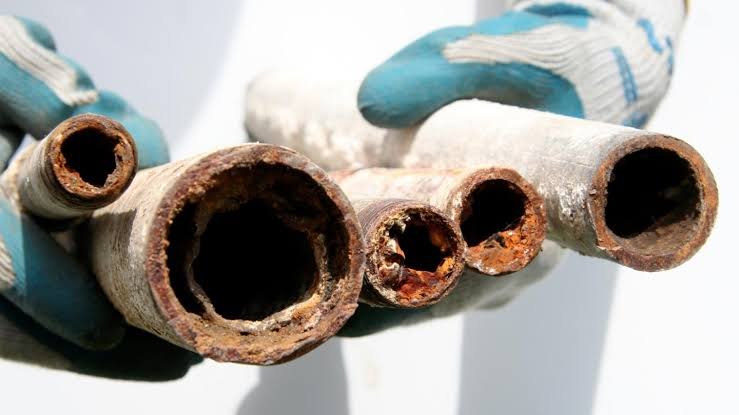
Heavy mineral deposits can interfere with water flow through small openings and reduce the efficiency of appliances that heat water. Showerheads, coffee machines, kettles and water heaters can all develop deposits over time.
A suitable treatment approach reduces build-up of scale by either reducing hardness minerals or managing the way those minerals form deposits, depending on the technology.
That distinction is important. Some systems soften the water, while others condition it to reduce the tendency of scale to stick to surfaces.
Managing Stains Around the Home
Hard water can also leave stubborn marks.
White mineral deposits are common, but iron and other substances in water can produce orange, brown or dark staining. If you’ve ever cleaned a bathroom fixture only to see the same stain return a few days later, you know how frustrating that can be.
A treatment system can help when the staining is caused by a water-quality issue that the system is designed to address.
But treatment shouldn’t be selected based solely on the appearance of a stain. Different stains can have different causes, so testing is useful before investing in equipment.
Reducing White Mineral Deposits
Many homeowners are particularly interested in treatment because they want to reduces stains and white-crusty deposits throughout the home.
While treatment can help, expectations should be realistic. The result depends on the hardness level, the treatment technology and how effectively the system is sized and maintained.
For some homes, conventional water softening may provide the strongest reduction in hardness-related scale. For others, a scale-management or conditioning technology may be preferred, particularly when the goal is to reduce deposits without removing all of the naturally occurring minerals.
The right answer depends on your priorities.
What About Chlorine Taste and Odor?
Hardness isn’t the only reason people install water filters.
Municipal water supplies may contain chlorine or chloramine as part of the disinfection process. While these disinfectants play an important role in maintaining safe public water supplies, some people dislike the resulting taste or smell.
An activated carbon filter is commonly used to address chlorine taste and odor. Carbon works through adsorption, capturing certain compounds as water passes through the filter.
This can make a noticeable difference to drinking and cooking water, particularly for people who dislike the flavor of treated tap water.
Whole-House or Kitchen Filtration?
If chlorine taste is the main issue, you don’t necessarily need to treat every drop of water entering the property.
A point-of-use carbon filter under the kitchen sink can provide treated water specifically for drinking and cooking. This can be a cost-effective choice when other household water uses don’t concern you.
Whole-house filtration, however, may be useful if you want to reduce chlorine taste and odor at multiple outlets, including showers and bathroom taps.
The choice depends on your goals and budget.
Testing Helps You Avoid Guesswork
Water treatment works best when it targets a known problem.
A professional water test can provide information about hardness, iron, pH, chlorine and other characteristics. That information can help determine whether you need softening, scale management, carbon filtration, iron removal or another technology.
It also prevents a common mistake: choosing equipment simply because it sounds advanced.
More treatment isn’t always better treatment.
Don’t Forget Maintenance
Even a well-designed system needs regular attention.
Carbon filters have a limited capacity and need replacement. Softening systems require routine servicing and, depending on their design, salt. Scale-management equipment may also have components or media that need periodic maintenance.
A neglected filter can become less effective over time, which is why replacement schedules should be taken seriously.
Before buying, ask about the cost and availability of replacement parts. A system that’s easy to maintain is far more likely to perform reliably.
A Cleaner, More Comfortable Home
Water treatment doesn’t have to be about chasing perfection.
If scale is covering your fixtures, staining your appliances or making cleaning feel like an endless chore, the right treatment can make daily life noticeably easier. If chlorine taste and odor are the main complaints, carbon filtration may provide a straightforward improvement.
Start with a water test, identify the actual source of the problem and choose a system that matches it.
The goal isn’t simply to install another piece of equipment in the house. It’s to reduce the problems that have been bothering you—less scale, fewer deposits, cleaner-looking fixtures and better-tasting water.
Sometimes, those small improvements are exactly what make a home feel more comfortable.