My neighbor Padma moved from Kodambakkam to Medavakkam on a Sunday in late August, and when I asked how it went she said, “Ask me again after the humidity leaves my body.” The truck arrived forty minutes late. The lift in her old building did its usual impression of a very old man deciding whether to climb another floor. And her mother’s granite ammi kallu, a small grinding stone worn smooth by decades of Thursday chutneys, rode on her lap in a shared auto with a folded saree beneath it, because she wasn’t about to hand it to anyone else. It arrived without a chip. Padma arrived with a sore back and a story.
That’s moving in Chennai. The city is warm, humid, loud and far kinder than it first looks, but it doesn’t hand out easy logistics. I’ve done two moves here and helped on a handful more, so here’s what I’d tell you over a tumbler of filter coffee, assuming it isn’t too hot for anything hot.
Weather first, association second
Most people pick a date and only later learn that Chennai has firm opinions about the calendar. April to June can drain a loading crew before noon. October to December brings the northeast monsoon, and anyone who’s watched a street turn into a stream overnight knows how fast a move can stall. If you’ve got any choice, January to March is the kindest window. Roads are mostly dry, the air is bearable, and movers aren’t stretched thin.
Whenever you go, start early. Seven or eight in the morning gives you a head start on OMR, GST Road and Anna Salai, all of which turn sluggish by mid-morning. And call your apartment association before you commit. Some Chennai complexes allow the goods lift only in a narrow window, some want a deposit, and a few ask for written notice days ahead. Ask about lift size, too. It decides whether your almirah travels whole or in sulking pieces.
Choosing who carries your life
Search for Packers and Movers in Chennai and you’ll get a wall of near-identical results, all with the same banners, the same “lowest price” promises, the same photos of cheerful men holding cartons. None of that tells you who will actually show up at your door and treat your belongings with care.
So slow down. Ask each company for a survey, in person if possible, or a long video call where you walk through every room. Open the cupboards. Show the balcony storage, the heavy furniture, the washing machine, the pooja shelf. A quote given without seeing any of that is a guess, and guesses have a way of growing into surprise charges.
Collect three quotes and read them closely. Look at what’s included: packing material, loading, unloading, stair carry, dismantling and reassembly, transit insurance. A suspiciously low number usually means something has been left off, and you’ll find out what when the final bill lands.
Keep the important details in writing. WhatsApp counts. A promise on a noisy phone call tends to evaporate by evening.
Reviews and the people you trust
Read online reviews with one eyebrow raised. Glowing paragraphs with no detail don’t say much. But one that mentions the crew arriving forty minutes late, wrapping everything carefully and charging exactly what was quoted? That feels like a real day, and it’s more reassuring than a wall of perfect scores.
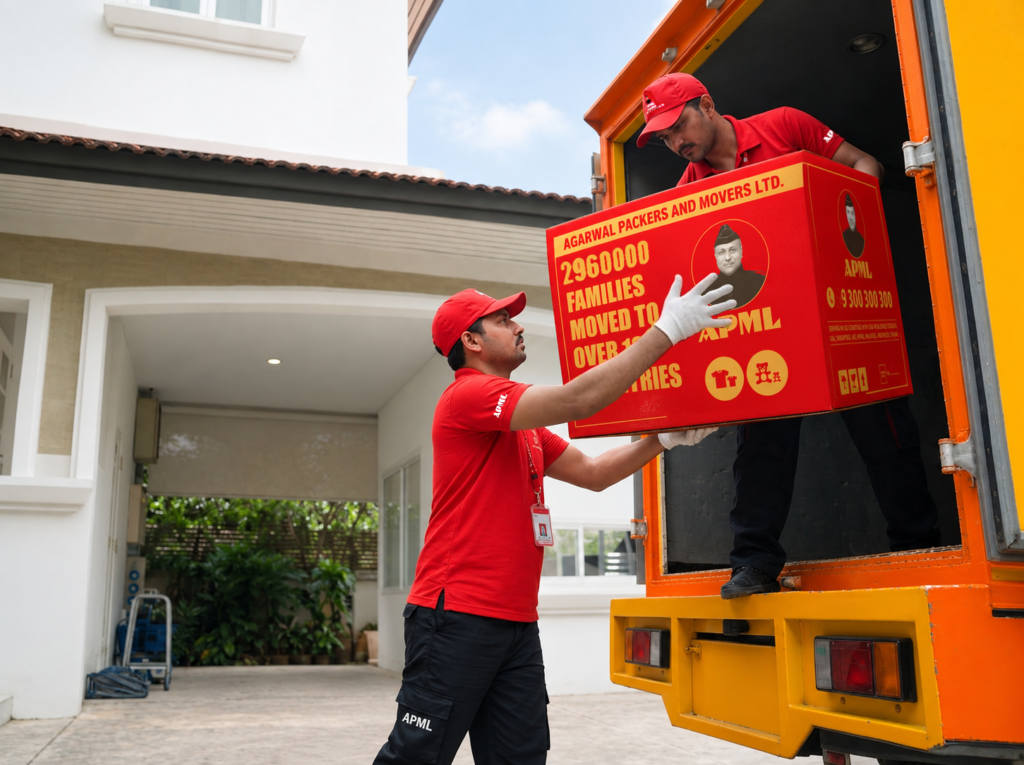
Better still is someone you know telling you their story. A friend of mine once described how Agarwal Packers and Movers Chennai moved her parents from Adyar to Anna Nagar, and what stuck with me wasn’t a grand claim. It was that her mother’s old bronze vessels arrived without a scratch, which in that household is close to a miracle. That’s the kind of small, specific detail worth listening for. Still, treat any single story as a starting point. Call them, ask for the survey, read the terms, and notice how they respond to awkward questions. How people answer before you’ve paid says a lot about how they’ll behave after.
What goes in the box, what stays with you
Let the professionals handle the heavy, fragile and awkward things. They have the foam, corrugated sheets and corner guards, and they can wrap a glass-top table without breaking a sweat. TVs, mirrors, crockery, the wet grinder you’ll never agree to replace.
But keep the irreplaceable things close. Documents, laptops, chargers, jewelry, medicines, a little cash, the kids’ school files. Put them in a bag that rides with you, not on the truck. A friend of mine once spent three hours on moving night tearing open cartons to find his property papers, which had ended up inside one marked “kitchen towels.” Please don’t be that friend.
Take photos of your furniture and electronics before anything is wrapped. It takes five minutes, and if something arrives dented, you’ll have a clean before-and-after instead of an argument on the pavement.
Carry less, pay less
Here’s something people notice a little late: you’re effectively paying for volume. So before the survey, go through your belongings with a colder heart than usual. Clothes you haven’t worn since 2020, cables for gadgets that no longer exist, three mixer jars that fit nothing, the plastic chair with a suspicious crack. Donate, sell or toss.
It’s oddly freeing. Arriving at a new flat with less stuff feels like opening a fresh notebook.
The day itself, and the hush after
Be there. I know it’s tempting to leave it all to the crew, but someone has to say which box belongs in which room, confirm the inventory and answer the dozen small questions that always pop up. Keep water and buttermilk around, because nobody works well dehydrated in this city. Tip fairly if the team has earned it. Then do a last lap of the old place: every shelf, every cupboard, the space above the loft, behind every door. Somebody always forgets something. I once left a row of steel dabbas in a kitchen cabinet. I like to imagine they’re thriving.
Then comes the part nobody warns you about. The truck leaves, the new rooms fill with unfamiliar cartons, and you feel oddly hollow. Tired, relieved, a little sad. That’s normal. Don’t try to unpack everything tonight. Make the bed, find the kettle, order something warm. The rest will still be there tomorrow.
Moving is never perfectly smooth, and I won’t pretend otherwise. Something will run late, something will end up in the wrong room, and a neighbor will definitely grumble about the lift. But with some planning, honest questions and a crew that actually listens, it becomes something you get through rather than something that gets through you.
Padma, by the way, still has the grinding stone. It sits on her kitchen counter in Medavakkam, and she says it’s the only thing in Chennai that has never once been bothered by the humidity.